
Lessons from SPEI

🇲🇽 Mexico is killing it in terms of digital payments. This might be a surprise since Mexicans rarely speak fondly of their banks, but it is true. Mexico just ranked amongst the 10 countries with the most “real-time” payments worldwide. It was also third in Latam, beaten only by Brazil and Argentina. So, how did this come to be? We found at least two reasons for it. Mexicans are increasingly connected to the internet through smartphones, allowing them to demand better bank services. At the same time, the Bank of Mexico has played a strong regulatory role in pushing technology forward, Join us as we explore the success story of Mexico’s Interbank Electronic Payment System (SPEI). As always, you are reading ConteNIDO, your go-to place for all things startups, VCs, and LATAM.
Inside Nido: What we are doing
Last week two of our Nido Fellows had lunch with one of our Co-Founding partners in San Francisco.

Want to Work for a Nido Portfolio Company?
In the Know with Nido: What we are reading
🗼Cellular provider América Móvil insists that tech giants like Google, Microsoft, and Amazon should share in the costs of telecom network deployment in Latam— a term they call “Fair Share.” With tech companies generating over 56% of network traffic, América Móvil emphasizes the need for equitable contribution to infrastructure investments. (El Economista)
🍎It’s been a good week for Apple. The company’s stock surged last week driven by investor optimism about new AI features in iPhones, including integration with ChatGPT. This anticipated AI-driven upgrade cycle could re-accelerate growth, as over 40% of Apple’s smartphones are iPhone 12 or older and will be ineligible for the new AI features recently announced by the company. However, there has been some initial skepticism to these announcements. Elon Musk, for one, has threatened to ban iPhones from his companies due to Apple's integration of OpenAI's ChatGPT into Siri, which might become a security risk. (Bloomberg, Techcrunch)
🇲🇽Mexico’s Secretariat of Environment and Natural Resources (Semarnat) has conditionally approved Telmex’s plan to install a submarine fiber optic cable linking Mazatlán with San José del Cabo. Total investment for the Mazatlán-San José del Cabo submarine cable system is expected to be $22.585 million, according to Forbes Mexico. (Forbes)
🇨🇳E-commerce platforms Shein, Temu, and AliExpress are under fire for alleged unfair competition and exploiting import rules in the US-Mexico-Canada Agreement (USMCA). Currentñy, the USMCA exempts low-value imports from tariffs and regulations, a loophole heavily used by these platforms. Mexico's regulatory body, Conamer, proposes stricter enforcement of standards for imports under $2,500. (Expansion)
🔋Google has teamed up with NV Energy and Fervo Energy to power its data centers with 115 megawatts of geothermal energy, pending state approval. This move supports Google’s goal of running on carbon-free energy 24/7 by 2030. (Bloomberg)
💸Tesla shareholders re-approved Elon Musk's $55.8 billion stock option compensation plan with 72% of votes, despite the pay package being previously voided by a Delaware judge. The company also announced a move of its legal domicile to Texas after the legal dispute that first inhibited Musk’s stock options plan. (Bloomberg )
💰Amazon is committing up to $230 million to startups developing generative AI-powered applications, with $80 million funding its second AWS Generative AI Accelerator program. This investment, mainly in AWS compute credits, aims to attract startups to use AWS infrastructure for their AI models. (Techcrunch)
💱StepStone Group successfully raised a $3.3 billion venture secondaries fund, indicating a strong interest and confidence among limited partners (LPs) in the venture capital market. The fund offers LPs a way to gain liquidity by selling their interests in venture capital funds and provides structured solutions like portfolio strip sales—still an odd practice in the world of VC. (Stepstone)
🎓Julio Frenk, a seasoned public health expert and current president of the University of Miami, has been appointed as the new chancellor of the University of California, Los Angeles (UCLA), marking him as the first Latin American to lead one of the most significant public universities in the United States. (Forbes)
📈The Federal Reserve decided to maintain interest rates unchanged during its recent meeting, with projections indicating a potential rate cut could be postponed until December. Fed Chair Jerome Powell highlighted that the U.S. economy has exhibited sustained growth and low unemployment, conditions considered better than long-term sustainable levels. This has led the Fed to adopt a cautious approach, waiting for clearer economic indicators before altering policy. (Reuters)
In-depth with Nido: What we are thinking

Few institutions in Mexico are a source of such hatred as seems to be the case with banks. Make an experiment. Ask most nationals about their experiences getting their first debit card (let alone credit) or trying to make an in-person payment. Odds are, you will uncover a large set of dissatisfactions from long wait lines to a lack of clarity on terms and conditions most banks follow. When our Escritor in Residence, José Luis Sabau Fernández, tried to open a bank account at his local subsidiary of a major chain, he spent over six hours waiting for a turn—although now some banks offer limited accounts you can open online. Simply put, Mexicans have a complex—and often frustrating—relationship with their banks.
But perhaps, it’s time to change our perspective on Mexican banking. There might be a great reason for enthusiasm in the country—enough that we decided to dedicate our entire newsletter to it.
Last week, payments company ACI Worldwide partnered with Global Data to make a comprehensive report on the state of real-time payments around the world. Namely, the ability to to transfer money within seconds, directly from your bank portal—think of PIX in Brazil, which is arguably the most famous system of this sort (more on Tekios). A key technology that allows underserved communities to enter a global economy by lowering the barriers to trade. And such tech is at the heart of our discussion for the week.
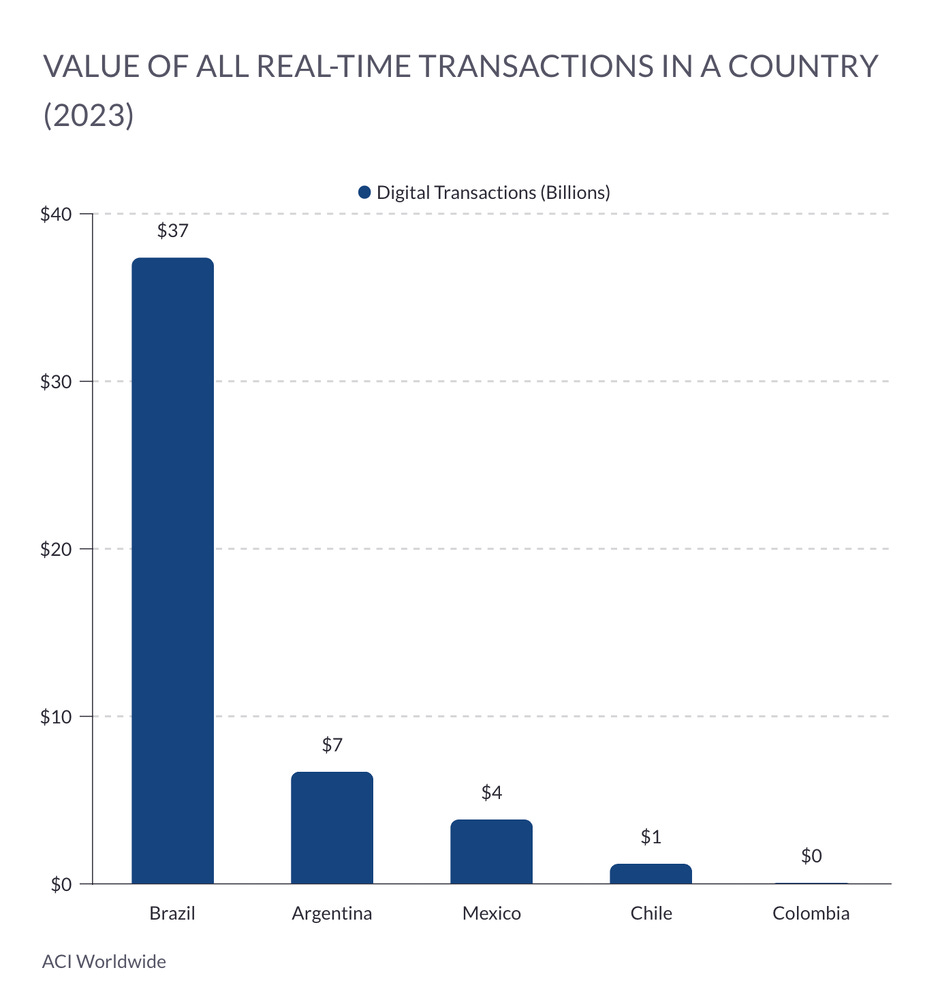
As it turns out, Mexico was ranked amongst the top 10 countries with the most real-time transactions in the entire world (more on EFE). When looking at Latam alone, the country quickly rises to prominence. At the time of writing, only Brazil and Argentina were better positioned than Mexico—Brazil was the second largest market for digital payments overall with over 37.7 billion real-time transactions in 2023. In total, it is estimated that, across all of 2023, Mexico’s real-time economy accounted for 3.8 billion transactions and is projected to reach over 5.8 billion by 2028 (more on Tekios). Far below Brazil’s impressive numbers but still significant for the region (the next country, Chile, has less than a third of the number of transactions).
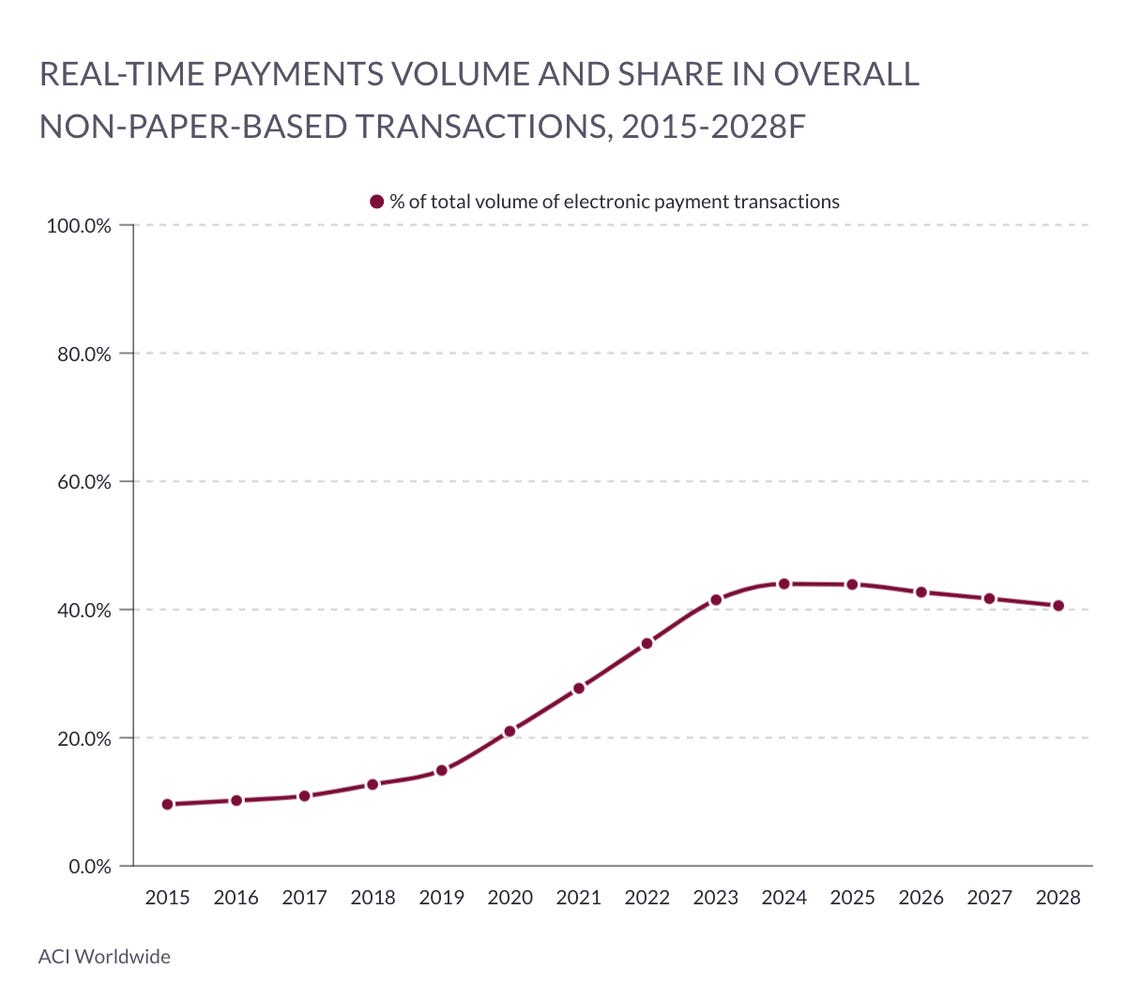
The data also shows that, in recent years, Mexico’s adoption of real-time payments has been growing significantly. In 2015, it was estimated that just 9.5% of all digital payments in Mexico were “real-time”; now, less than a decade later, that number is up to 41.5%. This means that by and large, citizens can seamlessly transfer resources as long as they have a bank account—which is still not the norm for 53% of the population, but is certainly a starting point (more on Forbes). In the span of the twenty-first century, Mexicans have come to expect real-time payments to be the norm.
So why is it that Mexico is doing so well when it comes to banking technology? We find at least two reasons for the phenomena.
The first is related to broader trends in the country. Just as, in the last decade, real-time payments have slowly become the norm, so have other technologies. Amongst them is the penetration of smartphones across Mexican society. In 2009, it was estimated that there were some 42.2 million smartphone users in the country. As of 2022—the most recent year for which data is available—that number had ballooned to 93.8 million (more on Statista). That means that, in a country with roughly 128 million citizens, 73.28% of them are cellphone users with mobile banking services
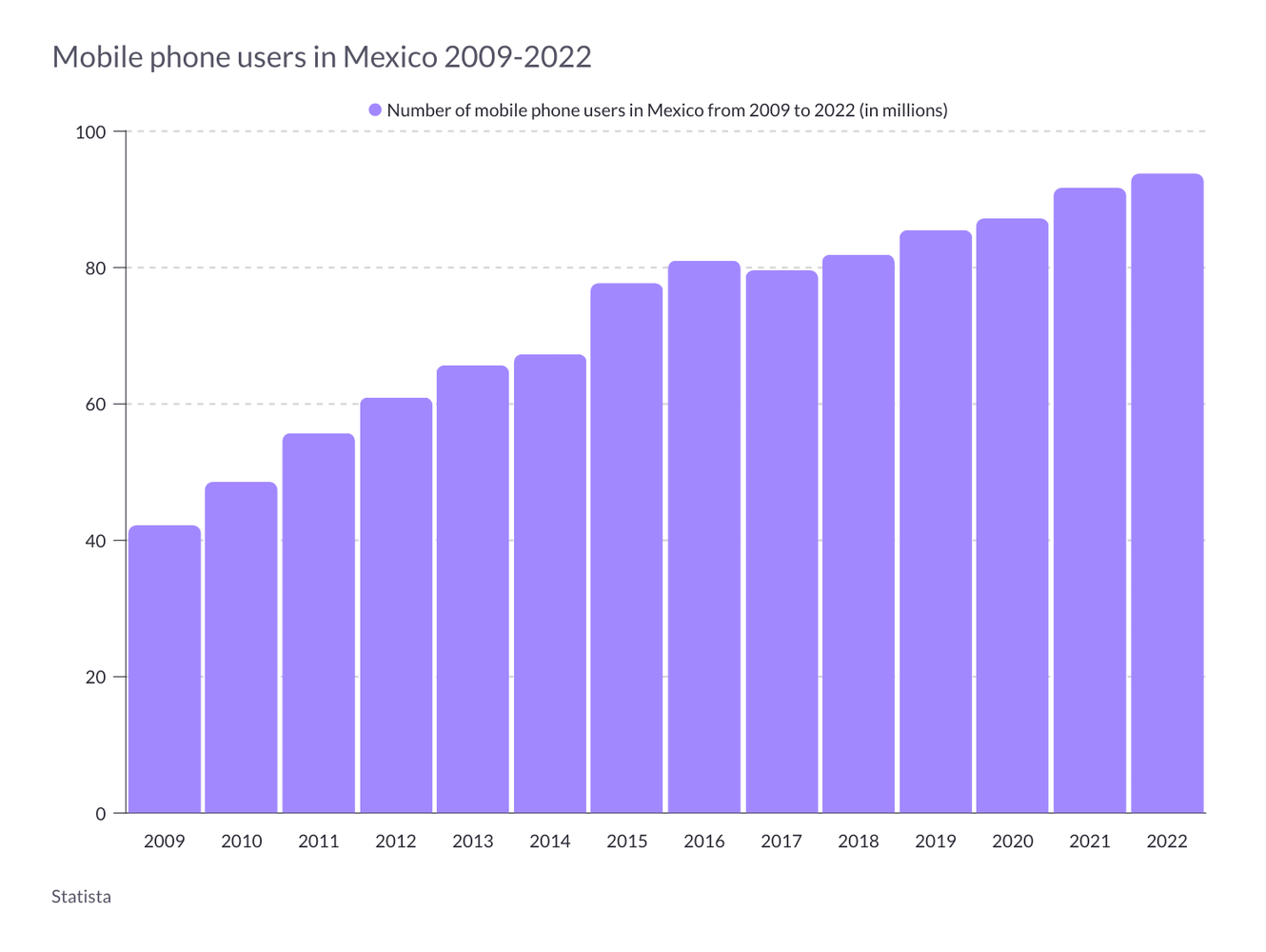
The above suggests a key fact. Over the years, Mexicans have adapted to technology and have come to expect it as a norm. Since Mexicans have more smartphones, they are better equipped to use modern banking apps and perform real-time transactions. Moreover, they expect them as a baseline service. So, in many ways, the rise of real-time payments could be seen as a natural demand of an increasingly tech-savvy population.
There is, however, a second explanation that is more institutional. It’s not just that Mexicans have more smartphones today—although that may well explain the recent rise in the use of the technology. It is also that real-time payments have found its champion in the Mexican Central Bank (Banxico) (more on Banxico’s page). Starting in 2004, it was Banxico—and not private banks themselves—that created a nationwide program to enable real-time payments: the Interbank Electronic Payment System (or SPEI for its Spanish acronym). By virtue of its legal standing and authority over the entire banking industry, Banxico can impose a system upon banks that better serve the population even before the population can use it in their day-to-day lives.
Now, SPEI is widely recognized as one of the best systems in Latin America, allowing users to immediately transfer funds by validating their identity with their bank (more on Expansion). Thus, Banxico virtually enabled the country to easily transfer funds before Mexicans even had the technology to do so themselves. It served as a strong government actor supporting innovation through regulation.
Today, these two forces meet in Mexico to create an atmosphere ripe for real-time payments. The country already has the infrastructure to allow the technology to work across banks and, at the same time, Mexicans are increasingly connected to online tools that enable them to use the mechanisms developed by the Bank of Mexico.
In an industry known for its inefficiencies and the frustration of its clients, the case of real-time payments offers a sign of hope for Mexico’s ambition and its ability to become not just a top 10 country when it comes to real-time payments, but a top 3. Mexico has the needed elements to create a more efficient banking industry and should push to do so in the future. More so in a market with over 300 Fintech startups, all of which are likely to keep pushing for development (more on Finnovista). Mexicans will continue to become technically savvy and, in turn, demand better products. The country’s government should anticipate those demands and build towards them, much as it did with real-time payments.